
Okay, you got me started.
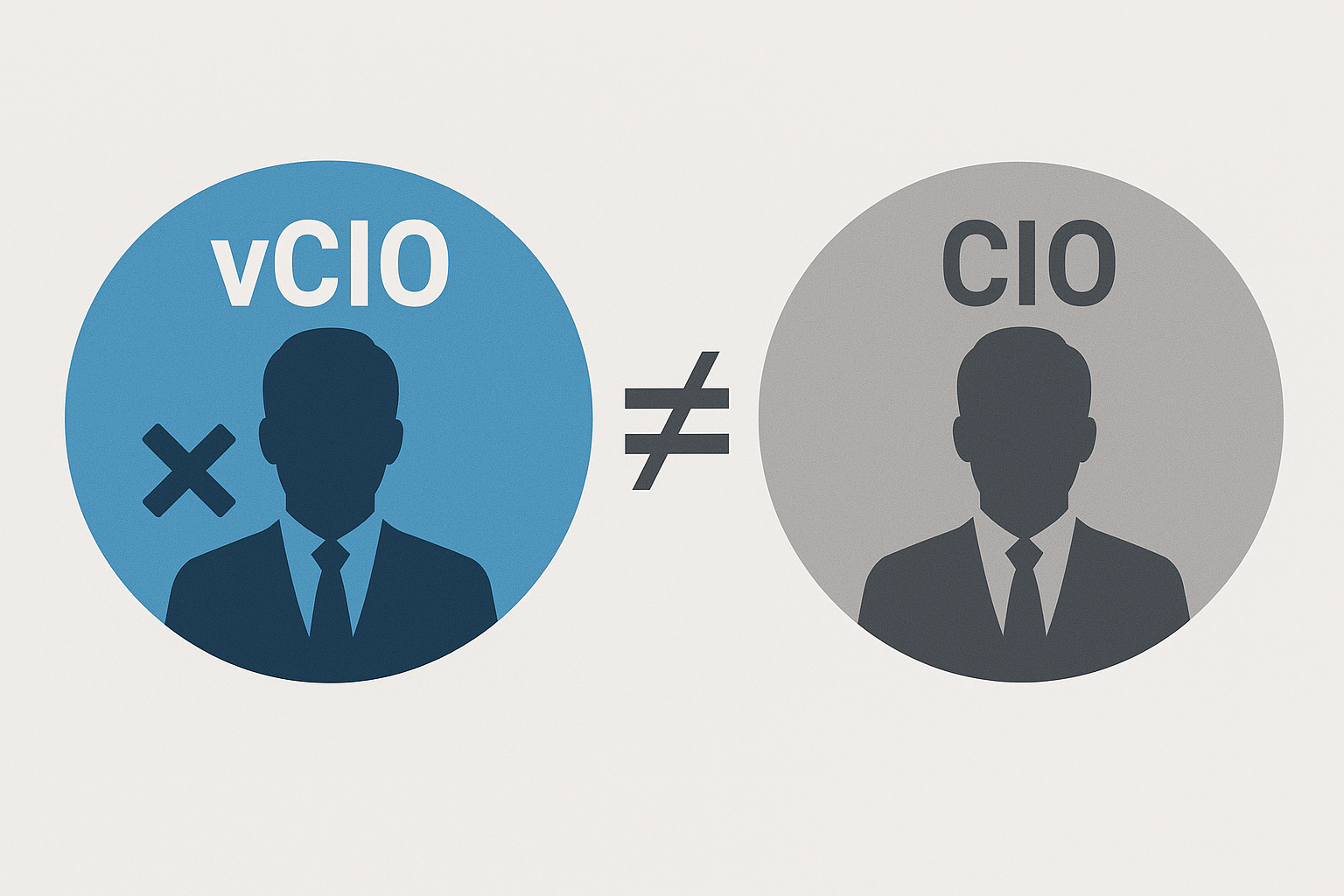
Here’s the thing: “Virtual” actually fits perfectly because in most cases, that’s exactly what they are – not real.
I need to be clear: this isn’t about the people doing this work. Most of them are talented technologists. Good people. They know their way around networks, security, and cloud infrastructure. They can solve real problems.
But here’s the uncomfortable truth: they’re not people you’d actually hire as your CIO.
A real CIO understands your business first, technology second. They spend weeks learning how your business operations actually work, what drives revenue, where the bottlenecks are, and what keeps your team up at night.
They ask about your growth plans – not just this quarter, but where you want to be in three years. They dig into your process challenges where manual work is slowing you down, where information gets lost between departments, where your team is building workarounds because the systems don’t actually support the work.
CIOs want to understand your technology talent situation: Are you struggling to hire? Losing people to burnout? Building technical debt because you can’t attract the skills you need?
Most “Virtual CIO” services are delivered by skilled technologists following a service model. They show up with proven technology stacks and established methodologies. They’re not there to understand your business at a deep level – that’s not what the economics of their service model allows for.
Real technology leadership starts with questions, not answers:
- What are you actually trying to accomplish as a business?
- Where do you want to be in three years and what’s technology’s role in getting there?
- What process challenges are creating friction in your operations?
- How is your technology talent situation affecting your ability to execute?
- Where does technology enable or block growth?
But that kind of discovery doesn’t fit neatly into a Managed Service Provider (MSP) offering. MSPs are built to deliver technology services efficiently—that’s their business model and they’re often quite good at it. But deep business discovery, strategic questioning, and unbiased advisory work? That’s fundamentally different economics and a different value proposition.
So you end up with capable technologists delivering a service labeled “CIO” that doesn’t actually reflect what a CIO does.
The term fits. Most of them aren’t real CIOs – even if they’re real professionals.
If you’re looking for actual technology leadership, look for someone who asks about your business, your growth plans, your operational challenges, and your people before they talk about technology.
And ask yourself: would I actually hire this person as my full-time CIO?
If the answer is no, then what you’re getting is technology services, not technology leadership.
There’s othing wrong with technology services. Just don’t confuse them with strategic leadership.