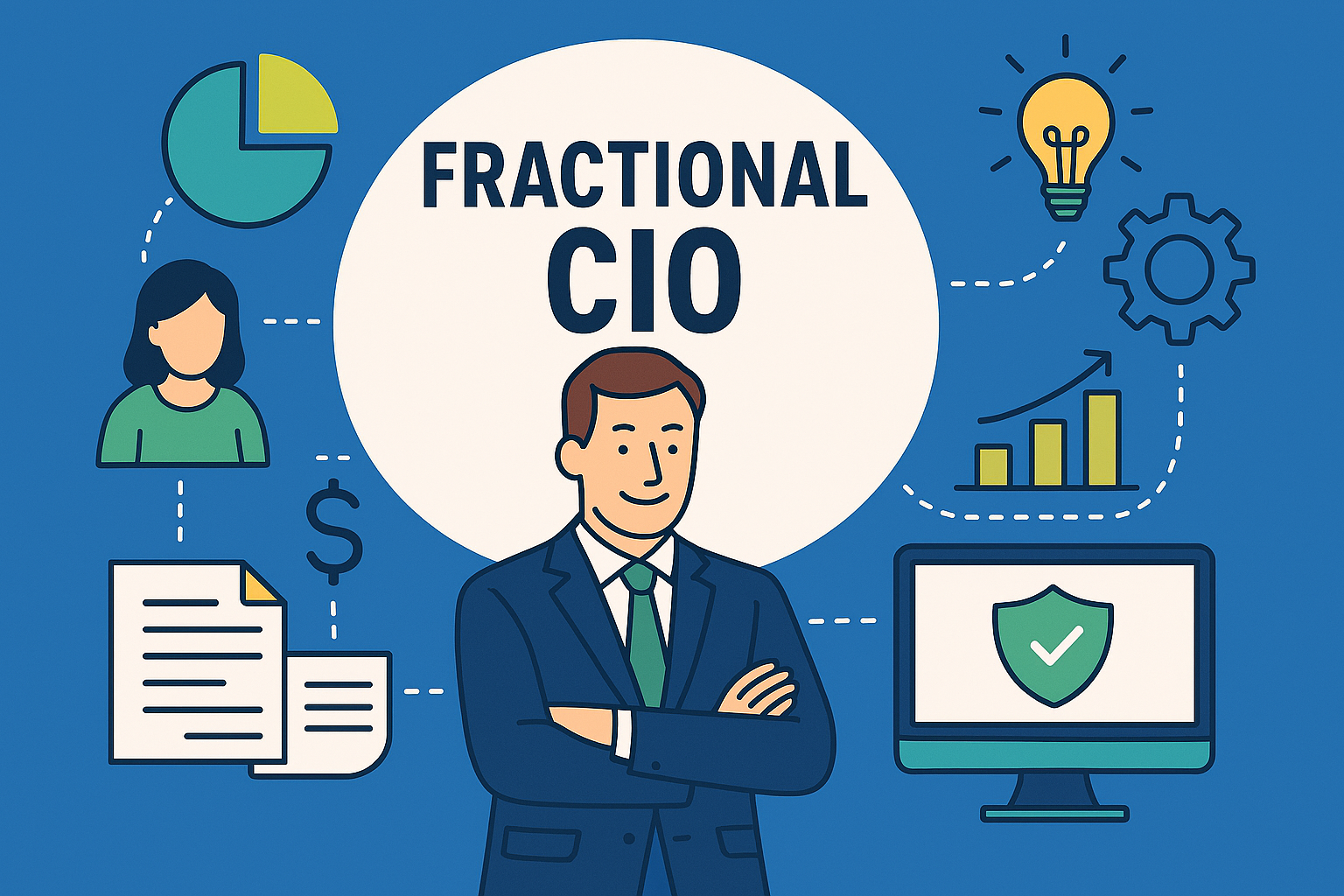

When most people hear “Fractional CIO” they think it’s about budget. You can’t afford a full-time executive, so you get someone part-time. And sure, sometimes that’s part of it. But it misses the bigger picture entirely.
The real advantage is that you’re not stuck with whatever skills happen to come packaged in one person. You can actually build the technology leadership your business needs right now.
What Technology Leadership Actually Looks Like
Think about it. Maybe you need strategic CIO guidance. Someone who can sit in leadership meetings, understand where the business is heading, and figure out what that means for technology decisions. For a mid-market company, that’s honestly a few hours a week, not 40.
But you probably also need someone who can get into the weeds operationally. Assess whether your infrastructure makes sense. Figure out if your Managed Service Provider (MSP) is actually doing a good job or just talking a good game. Design solutions that’ll work in your actual environment, not some theoretical perfect world.
And if you’re in the middle of real change, including new systems, new processes, and new ways of working, you need someone who understands how to bring people along. Not just roll out technology and hope everyone figures it out. Someone who gets the human side of technology transitions.
Those are three completely different people with three completely different skill sets.
The Problem with Hiring One Person
Here’s what usually happens with the traditional approach. You hire a strategic thinker and hope they can also handle the operational details and manage change. Or you hire a technical person and cross your fingers they can think at a business level. Or you find someone great with people and hope they know enough about technology.
You end up with someone strong in one area, decent in another, and weak in the third. And you’re paying them full-time either way.
Building the Team You Actually Need
With the fractional approach, you can actually get the right people for each piece all from one company. Real strategic thinking from someone who’s good at connecting business and technology. Deep operational knowledge from someone who’s been in the trenches. Change management expertise from someone who knows how to help teams actually adopt new ways of working.
You’re not paying three full-time salaries. You’re paying for the skills you actually need. But more than that, you’re getting real strength in each area instead of one person stretched too thin.
And here’s the thing; your needs aren’t static. During a big technology project, you might need a lot of change management support. When you’re picking vendors, you want someone who can see through the sales pitch. During normal operations, maybe you just need periodic strategic guidance and someone keeping an eye on things.
One person can’t flex like that, no matter how good they are.
This isn’t about what you can afford. It’s about building the right technology leadership for your situation instead of making do with whoever you can find.